The Role of DGA in Preventing Transformer Failures
Dissolved Gas Analysis (DGA) is one of the most powerful diagnostic tools for monitoring the condition of oil-filled power transformers. It helps detect internal faults at an early stage—often long before they become catastrophic failures.
Here’s why DGA is essential:
1. Early Fault Detection
When insulation or oil inside a transformer begins to degrade due to electrical or thermal stress, specific gases are generated and dissolve in the insulating oil.
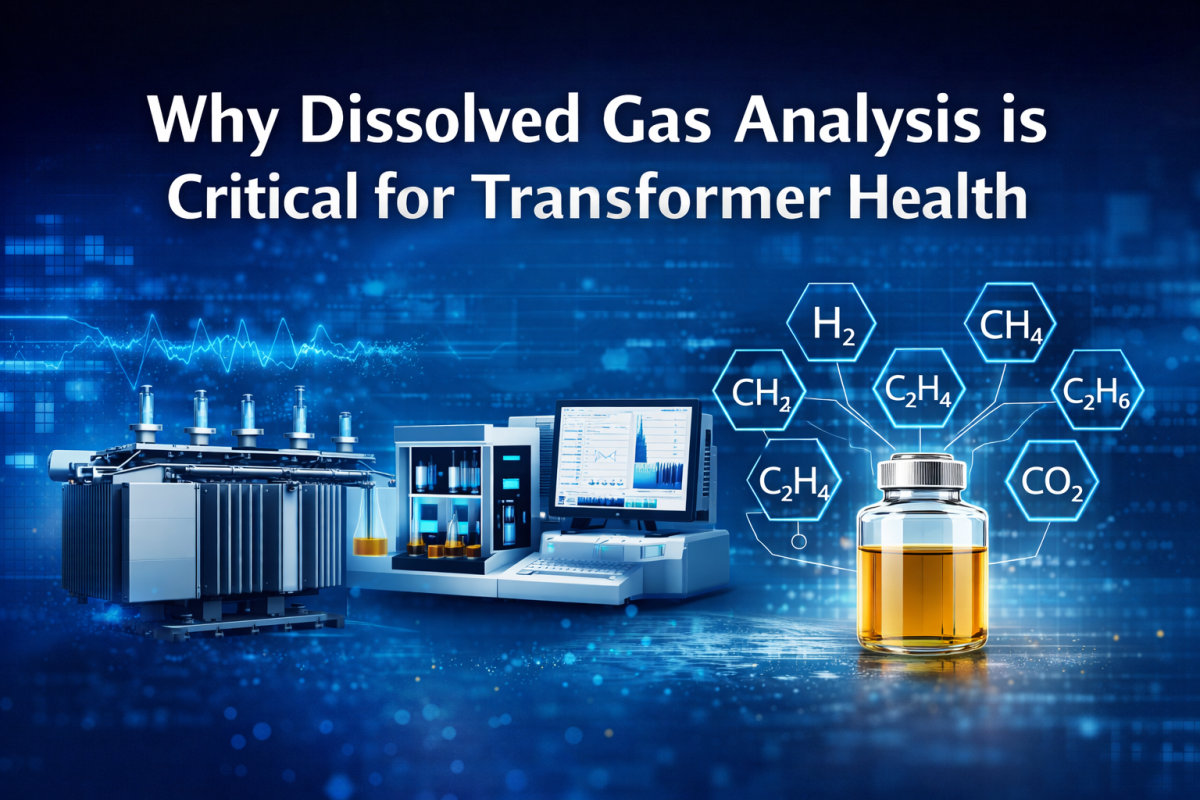
DGA identifies key gases such as:
Hydrogen (H₂)
Methane (CH₄)
Ethane (C₂H₆)
Ethylene (C₂H₄)
Acetylene (C₂H₂)
Carbon Monoxide (CO)
Carbon Dioxide (CO₂)
Each gas (or gas combination) indicates specific fault types like:
Partial discharge
Overheating
Arcing
Insulation degradation
Early detection prevents unexpected breakdowns.
2. Prevents Catastrophic Failures
Transformer failures can lead to:
Costly outages
Fire hazards
Equipment damage
Extended downtime
DGA acts as an early warning system, allowing corrective action before a minor issue turns into a major failure.
3. Extends Transformer Life
By monitoring fault progression trends over time, maintenance teams can:
Optimize loading conditions
Schedule preventive maintenance
Avoid unnecessary replacement
This significantly increases transformer service life and reduces capital expenditure.
4. Supports Condition-Based Maintenance
Instead of relying only on routine maintenance schedules, DGA enables predictive maintenance based on actual transformer condition.
This leads to:
Reduced maintenance costs
Improved asset reliability
Better risk management
5. Improves Grid Reliability
For utilities and industries, transformers are critical assets. Regular DGA testing ensures:
Stable power supply
Reduced downtime
Improved operational safety
Conclusion
Dissolved Gas Analysis is not just a laboratory test—it’s a strategic tool for asset protection. By identifying internal faults early, DGA safeguards transformer health, enhances reliability, and prevents costly failures